A Tale of Two Cities in Three Parts: An Experiment in Listening to the Locative in Montreal and Edmonton
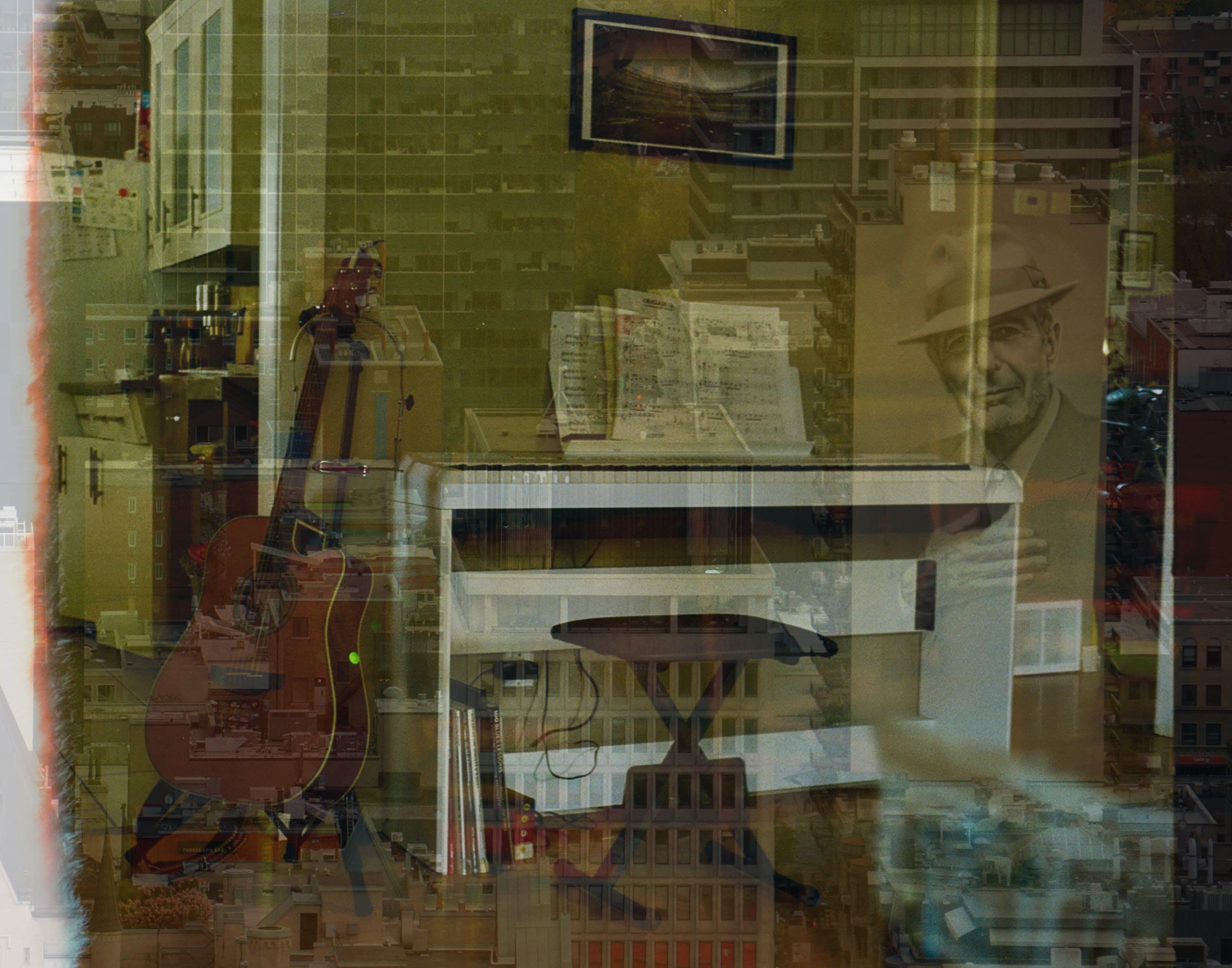
Three listening acts came together to tell a Tale of Two Cities through the sounds that make them. The soundscapes of Montréal and Edmonton clashed in a series of recordings to explore the locative aspects of sound. Act I delved into relatively unedited, ambient sound recordings, inviting listeners to reflect on the locations they were sonically transported to. Act II explored rhythmic patterns, broadly defined. Finally, Act III paired all the previously heard sounds with music. All the while, listeners were invited to reflect on the sounds heard (or misheard) and the impact left on them as sounds transitioned from the ambient, to the rhythmic, to the musical. Double exposures of Montreal and Edmonton were projected on the walls and cycled on a loop such that each location was obscured in much the same way as the audio recordings. The exhibition was staged at ExperSens (at the Institut de tourisme et d’hôtellerie du Québec (ITHQ) and at the Centre for Sensory Studies from April 8-11, 2024.
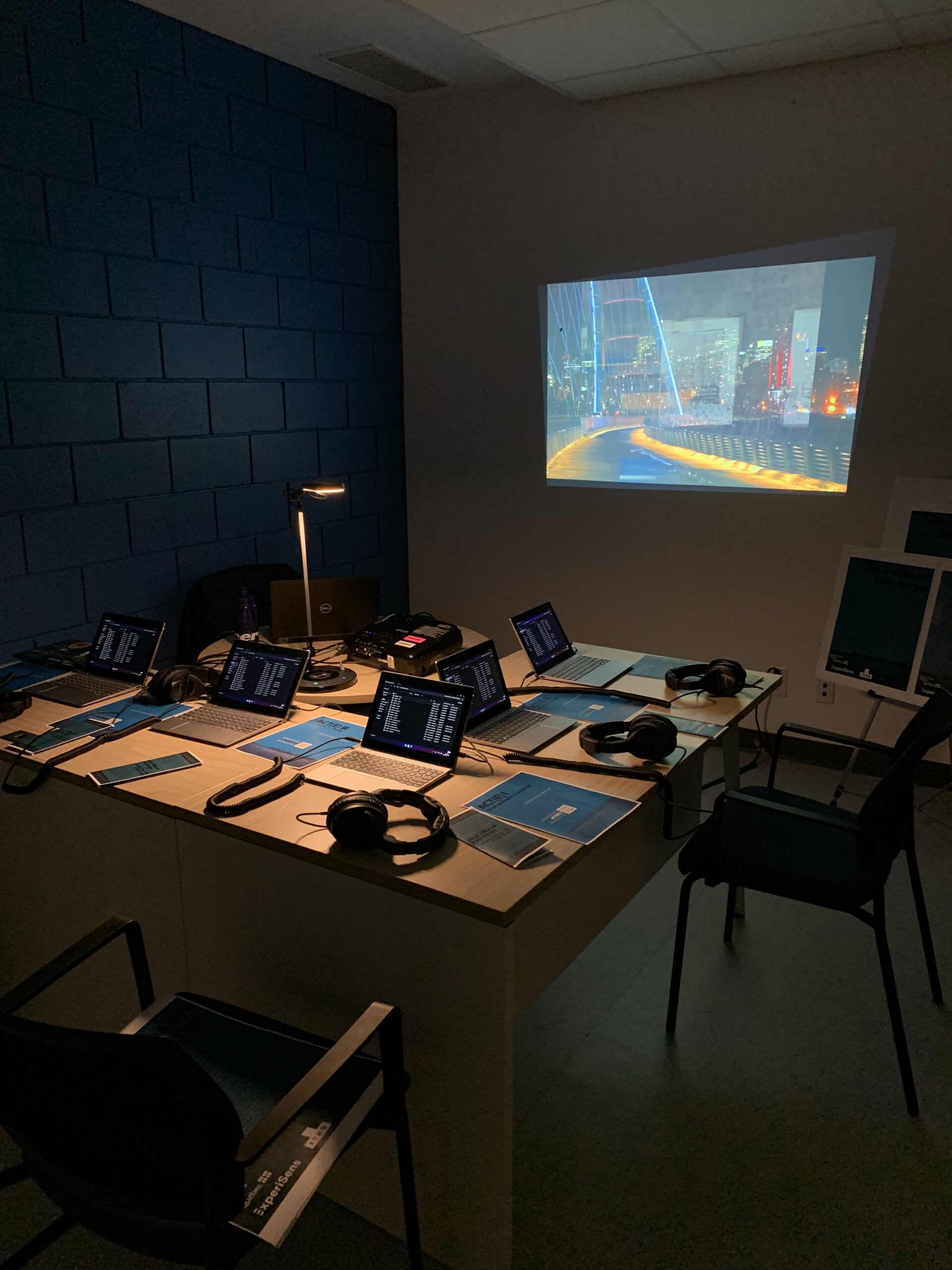
The tracks were meant to be listened to in a sort of “choose-your-own-adventure” type of listening experience. Listeners would begin by choosing a track from Act I and opening the associated listening guide and reflection, recording their thoughts and feelings of each track listened to. Listeners were asked to listen to a track, or more, from each act in sequence.
ACT I – Ambient
The sounds heard in each of this act’s tracks were recorded in Montreal and/or Edmonton – and tended to feature the sounds of one city more prominently than the other. Each track was been created with minimal editing, moving through various recordings to create a sense of a place. Each track in this section has a runtime of about four minutes. Listeners were asked to reflect on the sounds heard. Were there any places they were transported to? How did the recording make them feel (anxious, calm, indifferent, etc)?
AMBIENT – “activity”
AMBIENT – “built”
AMBIENT – “markets”
AMBIENT – “metro”
AMBIENT – “natur(e)al”
AMBIENT – “on high”
ACT II – Rhythm
The sounds heard in the tracks for Act II focused on rhythms, broadly defined. For some tracks, rhythms may have referenced music, or biology, or any other number of patterned experiences. Again, each of the tracks in this act were edited to be roughly four minutes in length. Listeners were invited to tune into the rhythms they heard (or thought they did). Did some sound like the rhythms of life in the place they lived? Did they sound foreign?
RHYTHM – “aggression”
RHYTHM – “buzzing”
RHYTHM – “circulation”
RHYTHM – “in the wild”
RHYTHM – “song of the sirens”
ACT III – Music
Each of the tracks in the final act worked to pair music and everyday sound (not that the two are necessarily inseparable). Here, the tracks ran from around five to ten minutes. Listeners were asked to reflect on the sounds as a whole. Did the meanings of certain sounds change when paired with music? Did one aspect hinder the way another is heard?
MUSIC – “Blurred Rhythms”
MUSIC – “sounds like home”
MUSIC – “the neoliberal shuffle”
MUSIC – “the pointe that you call home”
MUSIC – “WhyteNoize”
Craig Farkash is a doctoral candidate in the Department of Sociology and Anthropology at Concordia University, Montreal. His journeyman path through his BA led him from kinesiology to archaeological digs in Italy before realizing that it was the people in these places that fascinated him the most and settled on cultural anthropology. His research interests have moved from urban mythmaking and blues music to examining the rhythmic and sonic textures of urban soundscapes. An avid cyclist and musician in Edmonton, his most recent interests see him exploring the unconventional relationships between these varied sensed communities.
This exhibition was supported by funding from the Fonds de recherche du Québec – Nature et technologie.